Returning to work and making sense of the in-sensible, together
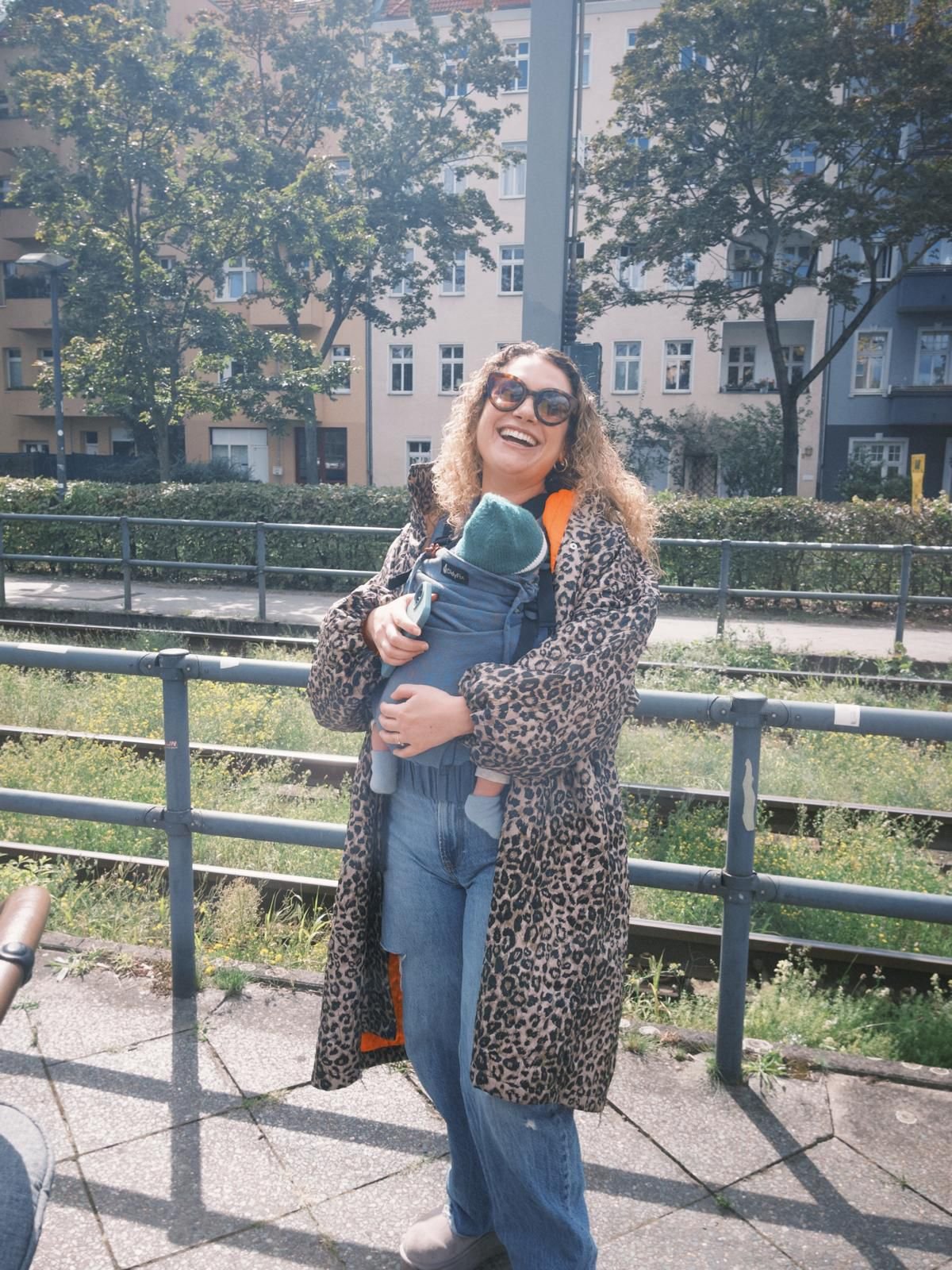
Photo by Sara Grossman
Dear friends,
After nearly nine months away—months in which my son Anton arrived and promptly turned my world on its head—I’m back.
This time has been euphoric, exhausting, and deeply humbling. Caretaking, in particular, has been transformative, reshaping how I understand responsibility, interdependence, and what it means to orient one’s life around another. I return to work carrying that experience with me and hope it will meaningfully shape both how I show up in this space as well as how the Forum continues developing into a network that fosters true interdependence and connection across difference.
I know these months have hardly been uneventful for you either. During many sleepless nights, I found myself—like so many—scrolling through headlines charting the continued rise of authoritarianism, imperial ambition, and the scapegoating of groups deemed as “other.” I won’t pretend I haven’t been shaken, as laws, institutions, and narratives that once felt like the solid scaffolding of society (for better or for worse) seemed to erode, sometimes almost overnight.
Indeed, it has become clear that we are living between worlds, which explains why so many thinkers have recently returned to Gramsci and what he famously called the interregnum: a moment between world orders when “a great variety of morbid symptoms appear.” What feels most disorienting, however, is the pace at which the old is dissolving and the slowness with which anything coherent seems to be taking its place.
In fact, incoherence itself appears to be a defining feature of the current order, which the Italian political analyst Andi Shehu has described as “a kind of imperial cosplay in which the theatre is not decoration, but the core function.” While state-sanctioned violence and injustice are not new, what is new is the absence of a legitimizing narrative to justify them. Coordinating strategy to advance justice and belonging is extraordinarily difficult when we are struggling to fully comprehend what we are even up against.
In trying to make sense of news that was confusing, horrifying and, at moments, quietly hopeful, I realized how much I had missed being in conversation with my peers and colleagues in the Democracy & Belonging Forum. Without spaces like the Forum—where we can think together honestly while maintaining our commitment to bridging and belonging—this moment can feel both incomprehensible and, perhaps as a result, unbearable. That realization is one of the reasons I’m genuinely grateful to be back: to return to the shared work of sensemaking, of finding steadier ground within the storm in order to take more strategic action, and of doing so alongside others committed to universal belonging.
In that spirit, I’ve shared below a short list of readings, conversations, and reflections that have helped me think through this moment. I warmly invite you to share what has been helping you as well—whether directly or in our Slack space.
I have no doubt the year ahead will bring more loss. But I also believe that together we can continue to make meaning, strengthen our capacity to bridge across difference, and take action toward a world in which everyone belongs.
With gratitude,
Sara
Recommendations
Memoir: Mother Mary Comes to Meby Arundhati Roy
The acclaimed author shares the story of her complex relationship with her feminist icon mother, as well as her own courageous efforts to oppose authoritarianism and Hindu nationalism in India.Memoir: Careless People: A Cautionary Tale of Power, Greed, and Lost Idealism by Sarah Wynn Williams
For a look inside how Meta wields global power and weaponizes polarization. Reaffirmed to me why the “belonging revolution” will not be televised (or rather, found online), but rather will happen in our homes, neighborhoods, and communities—as long as we can actually get to know each other and mobilize.Memoir: How to Stand Up to a Dictator, by Maria Ressa
In addition to her own story of becoming a journalist, Ressa offers the Philippines as a case study in how democracy gets eroded—and how the media can fight back.Substack: The Anti-Authoritarian Playbook by Scot Nakagawa
My perennial recommendation for concrete recommendations to counter authoritarianism.Substack: The Continental Brief by Andi Shehu
For a leftist European perspective on global politics.Newsletter: How We Win by Rashad Robinson
For strategic insights on movement building from a leading US organizerPodcast: American Unexceptionalism: Global Lessons on Fighting Religious Nationalism
For case studies in how religious nationalism of all kinds has been countered in different contexts.Research: (En)Gendering Authoritarianism - From the Democracy & Belonging Forum & Over Zero
I would be remiss not to share fantastic research co-authored by my colleague Miriam Juan Torres that explores how authoritarian movements weaponize gender to divide society and opposition movements, normalize social hierarchies, and lay the groundwork for authoritarian consolidation.
Editor's note: The ideas expressed in this blog are not necessarily those of the Othering & Belonging Institute or UC Berkeley, but belong to the authors.