Facilitating a big tent: Critical Connections for Pro-Democracy Organizing
Barabar Design for Fine Acts x OBI
“In this exquisitely connected world, it’s never a question of ‘critical mass.’ It’s always about critical connections.” Grace Lee Boggs
As we enter the second year of the current administration in the United States, calls for coming together to collaborate across siloes within the pro-democracy sector are louder than ever. The speed of authoritarian consolidation at the national level is swift and compounding, with real consequences both globally and at home. Many feel as though we are responding in fragments, always a step behind events that move faster than our collective infrastructure.
From our vantage point at the Horizons Project, however, a different picture is emerging. The groundwork for a more unified, cross ideological front is being laid, through intentional relationship-building across efforts that have traditionally operated in parallel. Beginning in 2025, Horizons has convened and facilitated a national ‘big tent’ group of organizations while also being a part of connecting adjacent coalitions, working groups, and leaders who have overlapping goals. This work focuses on building the connective tissue that allows trust, coordination, and shared action to travel across the pro-democracy ecosystem.
One factor shaping the success of these efforts often goes unrecognized: the role of facilitative leadership. Broad-based movements do not hold themselves together automatically. They require people and organizations willing to design a process, tend to relationships, surface tensions early, and create conditions where diverse actors can stay together without being flattened to their least common denominator. When this role is undervalued or unattended, even well-resourced efforts can struggle to sustain momentum.
In this article, we share early lessons from our big tent facilitation experience and what they reveal about how pro-democracy constellations of actors can continue to build durability, connectivity, and shared power in moments of strain and beyond.
Why a big tent? Look to the Pillars of Support
Discernment matters in moments like this. Leaders are asked to cut through noise, urgency, and fragmentation to decide how to move forward and with whom. One framework that guides the Horizons team in discerning where to place our organizing efforts is the Pillars of Support. This framework recognizes that any system of government depends on the legitimacy and resources of key sectors such as business, labor, faith, veterans, and professional associations. These “pillars” can either uphold or erode authoritarian power. Research from around the world shows that the most effective pro-democracy movements are broad-based, engage across partisan divides and work together beyond any one election.
The Pillars of Support research makes clear that each pillar has unique leverage points. Unions can halt production, faith actors can frame democracy as a moral imperative, businesses can set “red lines” for political behavior, and veterans can embody patriotic resistance. By surfacing these distinct assets in cross-pillar learning sessions, participants come to a better understanding of how their roles interlock and how collective impact emerges from our diversity. Horizons compiled more than 40 case studies of specific pillar actions worldwide to find inspiration in the tactical innovations and breadth of possibilities when pillars come together to fight for democracy.
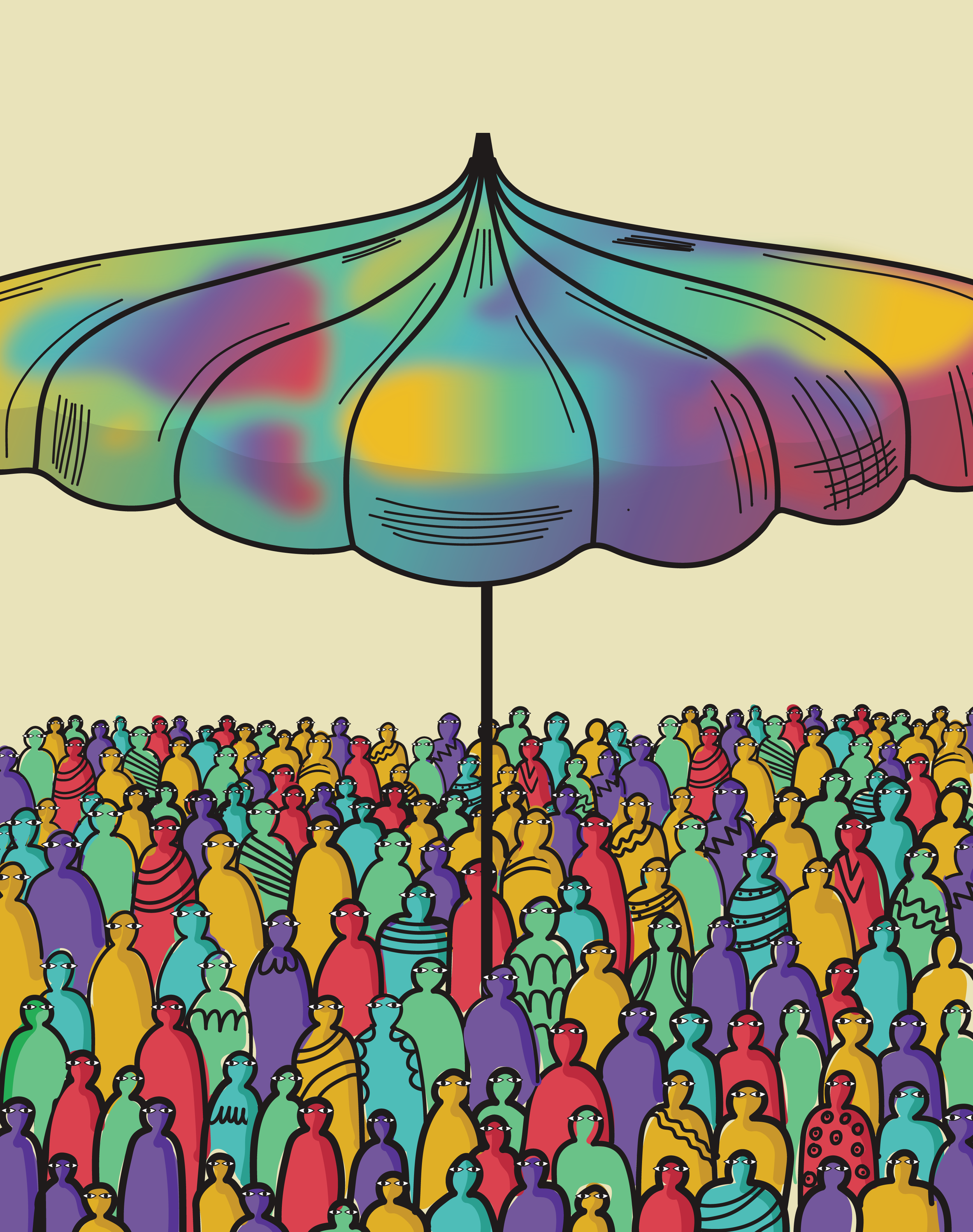
‘Big tent’ is a metaphor for a container wide enough for community organizers and issue-area advocates; institutional reformers; bridge-builders and dialogue practitioners; faith leaders; veterans and military families; business executives; labor unions; professional associations; artists and cultural workers; youth leaders; and much more. A formation that can hold progressives, moderates, conservatives disillusioned by authoritarian drift, and people who may not see themselves as “activists” but care deeply about their communities. A big tent approach ensures the active participation from those based in both urban and rural communities; from very different local contexts, with distinct cultures; and, with varied experiences of the very real harms wielded from both the historic and current authoritarian faction in the country.
When these actors move together, the goal extends beyond opposing authoritarianism. The work becomes about building the democratic future we want to inhabit. Power is generated not only through resistance, but through coordination, legitimacy, and shared responsibility.
The Horizons Project was founded with this challenge in mind: to serve as connective tissue across the pro-democracy ecosystem in support of big tent organizing. Over the past four years, we have focused on the relational and facilitative work required to convene and sustain cross-pillar, cross-ideological formations rooted in trust. The Horizons Project is just one of many national-level conveners and we are committed to working in deep collaboration and complementarity with other cross-sector, cross-ideological organizing efforts around the country.
Below, we want to share not only why such a formation is needed right now, but how we are learning to support it in practice. It’s not just coming together but staying together over the long haul to fight for and rebuild our democracy that is truly a facilitation challenge of a lifetime.
From Issue-Area Coalitions to Pillar-focused Ecosystem Organizing
Cross-sector coalition work is nothing new. All over the United States, groups regularly organize around specific campaigns, ballot measures, or policy fights. These groups are usually time bound, with unlikely allies coming together for a shared cause that may disband once the goal is achieved. Big tent organizing is different. The goal of protecting and renewing democracy is vast, long-term, and touches nearly every aspect of civic life. The threats are far-reaching: from election integrity to political violence, from erosion of civic norms to deepening inequality. Addressing all of these is a generational imperative that stretches far beyond the scope of a single campaign and requires a level of commitment to higher-order systemic goals beyond any one policy priority. In addition, organizing under the intensity of the onslaught of multiple threats, to create a sense of solidarity and common cause amid the barrage of attacks on our communities, livelihoods and civic freedoms requires new capacities from all of us, but especially the facilitators of these cross-sector, cross-ideological spaces to maintain the needed relational infrastructure.
To reach the promise of these cross-pillar collaborations, Horizons has been applying years of experience to feel our way forward as the facilitative stakeholder (meaning we know we don’t necessarily have all the answers, and come to this role with a lot of humility.) We are paying careful attention to the curation of pillar actors, the sequencing of conversations, the pace of gatherings and balancing the multiplicity of mindsets, priorities and constituencies represented. From our perspective, big tent requires of all of us more of an ecosystem approach and mindset. We are weaving together diverse assets, networks and cultures into a shared endeavor without expecting total alignment.
A more apt metaphor is that we are jointly co-creating a pro-democracy music festival of many tents: there are multiple stages, with different genres playing, a diversity of actors moving between them, co-creating our group dynamic (our festival’s ‘vibe’) propelled forward by a shared purpose. An important aspect of the ecosystem approach, therefore, is understanding that the purpose of the big tent will be emergent and evolving. We seek to strengthen relationships and cohere efforts to prepare for and respond to the rapidly changing political and cultural dynamics. Indy Johar recently uplifted the concept of ‘generative emergence’ a state in which “distributed actors align, adapt, and self-organize toward shared but evolving purposes.” This resonates with the Horizons team as we have always been working towards a clear guiding star of democracy, but with a commitment to deep relational organizing and a spirit of emergence.
Considerations and Decision Points for big tent Facilitators
As seasoned facilitators and organizers, we practice on-going self-reflection and continual learning and adaptation. The section below is not meant to be prescriptive on how to facilitate a cross-pillar formation. Rather, we are sharing the story of our experience thus far, naming some of the considerations we have faced, and the decisions we have made (sometimes on-the-spot) within the container we are creating for a big tent formation.
Initial scoping and establishing credibility as the convener & facilitator
Who to bring together to establish those critical connections. With the help of key partners, our initial scoping efforts of who to invite for the first big tent retreat focused on sector-specific national networks with a mix of diverse state-based representatives from those networks. We conducted outreach to those sectoral organizations who represent or are connected to a broad constituency, who have influence and the ability to move people to action, and who have a posture of collaboration and curiosity of other sectors.
The size of the gathering is always a difficult decision point. Our goal was to keep the group to no more than 50 people initially so we could prioritize relationship-building. Keeping the first convening that small was not an easy task as we had conducted wide outreach to members of faith communities, veterans and military families, labor unions and civic pillars across the ideological spectrum, with some business and legal sector representatives and arts & cultural pillar leaders.
Considering the initial list of potential invitees as a slate, instead of making one-off decisions about individual invitees, helped us ensure that the curation of the group included a diverse representation of sectors, and to have a mix of gender, race, ideology and geography. We could have ended up with a thousand different combinations of participants, but we landed on an impactful and diverse group for that first gathering.
Determining any pre-conditions for participation. While we were carefully curating a broad representation of different constituencies, we also wanted to create an extremely low bar of entry for that first gathering. We started our outreach by discussing the authoritarian threat in the country as a baseline shared understanding, but also acknowledging that there are many entry points to pro-democracy work. The central question during our scoping interviews was whether those actors saw value in gathering together to explore a big tent formation. We sensed early on a growing acknowledgement and appetite for this type of sector diversity and connections amongst previously siloed groups. We asked about existing priorities and organizing efforts but did not aspire to any baseline alignment as a pre-condition.
Early goals: Relationship-building, shared understanding and pilot experiments
Many workshops or retreats often feel overly scheduled with the urgency of the moment, and yet participants also want to feel that their precious time is being well spent by attending (yet another) convening. Relationship-building activities may not feel like real work and yet we also know that trust is the currency that flows through successful relational infrastructure and takes time to build. Facilitators can over-prioritize analysis or planning work that ends up being more transactional and yet somehow seen as more “productive.” The Horizons Project strives to create a different dynamic, by clearly setting expectations early on that we will be spending time getting to know each other and that we always toggle between head work (analysis, frameworks, strategy) and heart work (storytelling, relational exercises, partner walks).
Less is more. Spacious agendas are not only a sign of respect for people’s energies and ability to show up to participate fully but also allows for participants to have unstructured conversations. We live in a culture of urgency, where meetings are often crammed with content. Horizons has experienced that big tent convenings require space. Most of the participants arrive exhausted, carrying both their day jobs and the democratic crisis. To conscientiously build a sense of belonging, we slow down. That means 90-minute lunches with time for partner walks, generous breaks, and agendas that breathe. The facilitators definitely experienced push back from some participants, especially those with military or corporate backgrounds that may experience the relational work as “touchy feely” and are anxious to get to strategic planning together. Yet, we feel strongly that spaciousness is not indulgence; it is respect for our humanity and allows us to think more clearly together. Ironically, we have found that slowing down produces more durable outcomes because people connect deeply and leave our gatherings energized instead of depleted.
Developing a shared understanding of organizing frameworks and contexts. We spent time delving into the pillars framework and why this configuration of sector-specific networks and organizations is so powerful and needed to confront the authoritarian threat. To bring to the fore the organizing contexts and cultural differences within each sector (which is also very diverse within sectors) we heard directly from each of the pillars. This helped everyone to better understand the complex realities facing the different sector leaders and also to ground their expectations of what we could realistically expect from each other. Seeing the overlap and distinctions amongst the different sectors’ organizing challenges and wins allowed the group to organically build a shared agenda.
Pilot initiatives as a starting place to build momentum and trust. The group built off their shared challenges and bright spots to identify potential areas for collaboration and experimental actions. We asked the question ‘how could being a part of a big tent help you with your current work?’ building off existing priorities and not imposing new ones. In cross-pillar working groups, we discussed actions that would be “safe enough to try, safe enough to fail.” The focus was not to agree on the most strategic areas for big tent to fight the authoritarian threat, but rather to start with actions that would build our muscles for collective action and strengthen the relational scaffolding.
Other lessons from facilitating the on-going work of big tent
Since that first retreat, Horizons has continued to support this big tent in its collective work and continues to learn and adapt. Here are some other lessons from the journey so far:
Co-leadership has been helpful to ensure buy-in and diversity of perspectives. A Stewardship Group with representation from each of the pillars has been an important space to grapple with key decisions both on the process and substance of how this particular formation continues to move together.
Shared purpose, not alignment, with opt-in/opt-out participation. Early on we co-created a statement of purpose that affirms our commitment to a cross-sector and cross-ideological formation and that names our core democratic principles: commitment to nonviolence, rule of law, peaceful transfer of power. Beyond that, we have resisted overengineering alignment. We use a consent-based model for decision-making: not everyone has to agree, which allows the formation to move forward without complete unity, with some opting into a specific aspect of the work, and others opting out. This flexibility keeps the tent wide. It also mirrors lessons from successful pro-democracy movements abroad: diversity of tactics is a strength.
Prioritizing space for cross-pillar learning. We may think we know what “the business community” or “veterans’ groups” think or should be doing. Yet, every pillar is complex, diverse, and grappling with its own challenges. We make sure to dedicate structured time for pillar updates: What is happening in your field right now? How are current events being processed and addressed? Where are there openings for bringing more of your constituencies into the pro-democracy endeavor, where are there organizing challenges and how can other pillars help? This complexifies our understanding of the vast ecosystem and clarifies how we can best support and complement each other’s work.
Need for intra-pillar organizing. In order for inter-pillar work to be productive, it has been helpful to strengthen the connections within specific pillars. Together with pillar leaders, Horizons has been supporting pillar-specific retreats, webinars, trainings, and joint communications efforts. This helps to adapt both language and processes to each pillar context.
Normalizing difficult conversations. Coalitions or formations like big tent rarely collapse over strategy; they collapse over unspoken tensions. Horizons therefore integrates short “educationals” or skills-building sessions into all of our in-person or virtual gatherings on topics like moving from competition to collaboration; active listening and conflict-sensitive communication; understanding power; and navigating interpersonal “ouch” moments. Even a 30-minute exercise equips people with tools to stay at the table. Naming that conflict will arise, and practicing together how to navigate it, transforms friction from a threat into a source of growth.
These conversations also strengthen our ability to counter the narratives designed to divide us. Disinformation thrives when people only hear one story in their silo. In big tent spaces, participants are able to swap stories and test language across pillars. That cross-pollination builds resilience. When a business leader hears how disinformation targets veterans, or a faith leader hears about eroding trust in elections, they leave with narratives that inoculate their own communities. Convening is not just about strategizing, coordinating, and managing conflict; it is about equipping people to carry more compelling stories back home.
Expanding deep instead of wide. Over the past months we have invited a handful of new networks and coalitions to participate in the big tent strategic retreats to continue strengthening the group’s reach and diversity. But the main focus for growing this big tent has been to invite additional participation from within each organization or network, going beyond the leadership level. This enables us to establish deeper connections within each group and maintain consistency of participation if one representative cannot attend a meeting. This is also a way to spread the ethos of pillar-focused, big tent organizing to more people with influence within the broader ecosystem.
Shared sense-making. We know that each pillar is not a monolith and experiences different political or cultural moments in many different ways. Creating the space to regularly compare insights across fields has opened up new understandings and unexpected complementarity.
Organic Collaboration and Solidarity. We have found that the real magic often happens informally: groups supporting each other’s rallies, co-hosting panels, or sharing funder connections. During our gatherings, we have explored how each of us experiences solidarity so that we can tailor the best way to support each other as individuals and as organizational/network leaders. As the trust continues to solidify, asks and offers spread throughout the big tent so that each of our efforts are strengthened with cross-pillar inputs and connections. We have seen how these informal collaborations ultimately lay the groundwork for larger collective action.
Closing: Belonging as a Democratic Practice
At the heart of it, big tent organizing is about belonging, which takes significantly more time and artistry than we may think. It is about creating spaces where people who rarely sit together can build trust, move forward without total unity, disagree without breaking, and discover the joy of unexpected allies. Authoritarianism thrives on division and isolation. The antidote is relationships rooted in belonging, especially ones across difference.
Belonging is also structural. When participants experience belonging in a convening, they carry that practice back into their institutions. A veteran who feels genuine belonging in the big tent may return to their networks with renewed purpose; a pastor may frame democracy as part of their congregation’s faith practice; a business leader may consider exploring civic red lines in their workplace. Convening in this way does not just create belonging in the room, it reconfigures the pillars of society to lean toward democracy and find the courage for more muscular resistance tactics.
For big tent organizing to be successful, we are co-creating an undertaking where conservatives, moderates, and progressives come together, representing different pillars with diverse mindsets and constituencies. Each of our own experiences in our respective careers span different sectors and political traditions, and our team and close collaborators identify across the ideological spectrum. That breadth gives us credibility to build bridges that might otherwise be closed. Veterans, business leaders, faith actors, labor organizers, and civic leaders carry immense moral and cultural authority across the spectrum. When they lean toward democracy, the ground shifts. Very intentional facilitation of so many layers of diversity is essential as we create a pluralistic group cultural that welcomes participants from every tradition without suspicion and recognizes the specific power each brings to our collective efforts.
Author bio:
Julia Roig is the Founder & Chief Network Weaver of the Horizons Project and has more than 30 years of experience working for democratic change and conflict transformation around the world. Throughout her career she has been called upon to translate between theory and practice, while seeding new approaches, organizing principles, and mindset shifts for social change. After serving for 14 years as President and CEO of PartnersGlobal, in 2022 Julia launched the Horizons Project to focus on the intersection of peacebuilding, social justice, and democracy in the United States.
Andrew Regalado is a Senior Organizer with the Horizons Project and brings a holistic approach to organizing—one rooted in trust, adaptability, and a belief in the power of shared values to unite unlikely allies. He leads cross-sector initiatives that engage business leaders, labor unions, civic groups, veterans, and faith communities to strengthen the pro-democracy ecosystem. With a background in public policy, political strategy, and coalition-building, Andrew’s work focuses on bridging divides and building trust across movements to advance inclusive democratic action.
Editor's note: The ideas expressed in this blog are not necessarily those of the Othering & Belonging Institute or UC Berkeley, but belong to the authors.