Rebuilding Belonging, One Conversation at a Time: In Conversation with Adrienne Evans
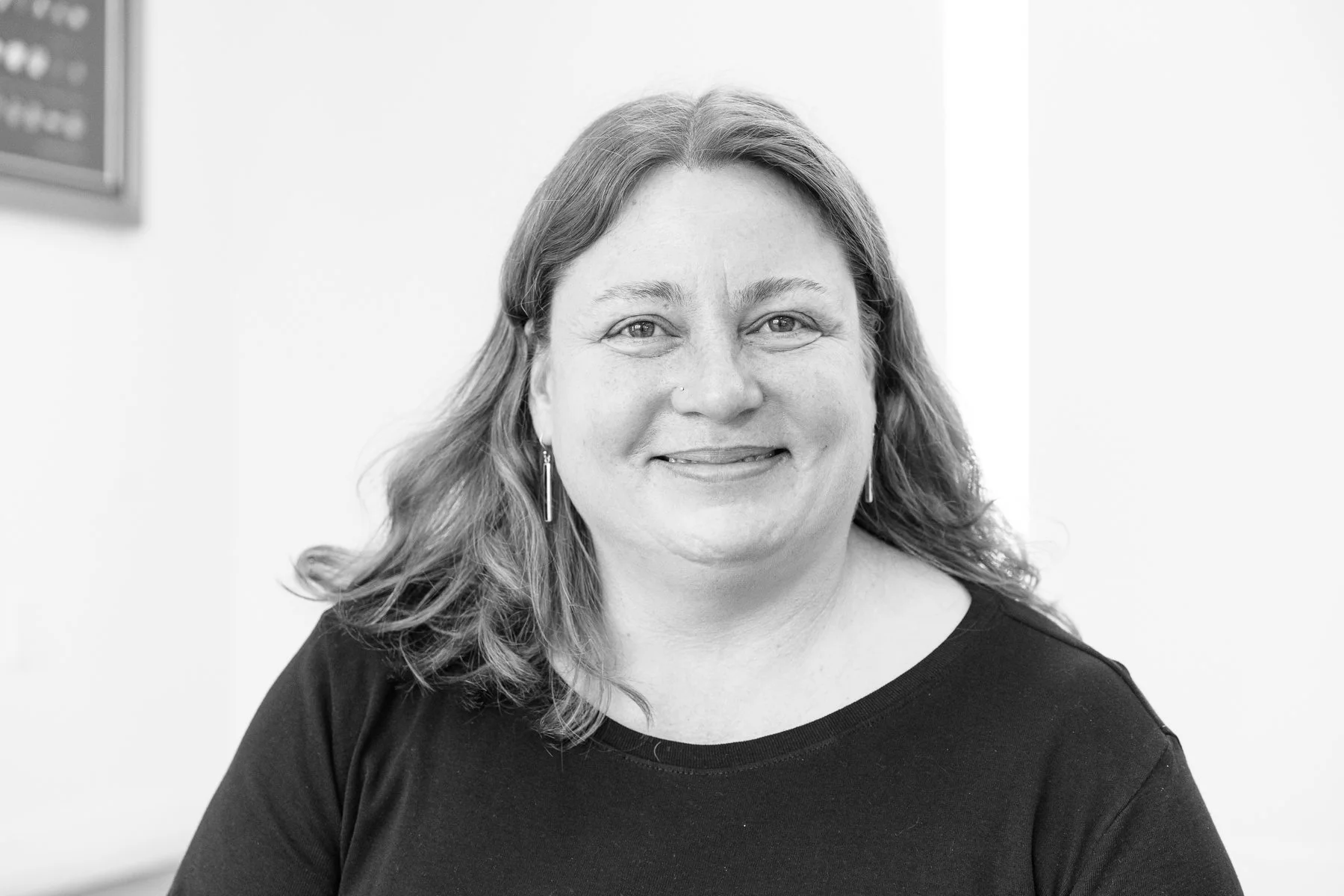
Adrienne Evans is a sociologist, organizer, and Executive Director of United Vision for Idaho (UVI). For nearly twenty years, she has worked to strengthen democracy, rebuild trust, and foster belonging across political and social divides. In 2020, she founded the United Vision Project, a national initiative that has reached more than 1.4 million people across thirteen states and facilitated over 107,000 conversations aimed at understanding political polarization, rebuilding trust, and strengthening civic participation through large-scale relational organizing and dialogue across political differences to build broad based democratic power. Evans is a recognized national and international specialist on relational organizing, democratic renewal, and community-based approaches designed to create lasting structural and systemic change.
In this conversation, Lara Habboub, Communications Lead for the Democracy & Belonging Forum, speaks with Adrienne about what years of door-to-door organizing in Idaho have taught her about bridging divides, and what it looks like when curiosity rather than persuasion becomes the foundation of democratic life.
To start, could you tell us a bit about your background and what led you to this work? What experiences shaped your commitment to bridging divides and community engagement?
For more than 15 years, I have organized in Idaho, one of the most rural and politically conservative states in the US. Much of my work has focused on communities that are often misunderstood, overlooked, or written off entirely by national political and philanthropic institutions. Living and organizing in these spaces taught me something important very early on: people are rarely as simple as the narratives we construct about them.
At the same time, I have spent much of my adult life traveling and working internationally, spending time in places grappling with questions of identity, democracy, conflict, memory, and belonging. I have stood in South Africa examining the legacy of Apartheid, walked through Auschwitz and reflected on the consequences of systematic dehumanization, spent time in Israel and Palestine witnessing how competing histories and traumas shape contemporary realities, and traveled throughout Eastern Europe as countries wrestle with democratic backsliding, nationalism, corruption, and questions of collective identity. In Ukraine, I witnessed a society fighting not only for territory but for the preservation of democratic aspirations and civic life itself.
What emerged from those experiences was not a sense of how different these places were from one another, but how often they were wrestling with variations of the same fundamental questions.
Who belongs?
Who gets to define the boundaries of belonging?
Whose suffering is recognized and whose is ignored?
What happens when people lose trust in institutions, one another, or the future itself?
One of the most important lessons I learned is that polarization is often misunderstood. We frequently talk about it as though it is primarily a disagreement over facts, policies, or political ideology. Those things matter, but they rarely explain the depth of the divisions we are witnessing.
Across countries, cultures, religions, and political systems, I found that people were often grappling with a deeper set of human concerns: dignity, identity, recognition, security, meaning, and community. Whether in a rural Idaho town, a village in Eastern Europe, or a community still grappling with the legacies of apartheid or conflict, people were trying to answer remarkably similar questions about who they were, where they belonged, and whether they had a future worth investing in.
What changes from place to place are the stories, symbols, and political actors that channel those anxieties. The underlying human needs remain remarkably consistent.
That realization fundamentally changed how I approached organizing. It shifted my focus from viewing political division as primarily ideological to understanding it as a crisis of belonging.
The work of United Vision for Idaho and the United Vision Project emerged from that understanding. Through hundreds of thousands of interactions and tens of thousands of sustained conversations across political, racial, geographic, and cultural differences, we have sought to better understand what is driving democratic fragmentation and what conditions make reconnection possible.
Much of your work takes place in rural communities, where social and political divides can feel especially personal and deeply rooted. Why do you think bridging work is particularly significant in rural areas today?
One of the greatest misconceptions about rural communities is that they exist at the margins of our political and social life. In reality, many of the forces reshaping American democracy became visible in rural communities long before they captured national attention.
For decades, rural communities have experienced the cumulative effects of economic restructuring, declining local institutions, media consolidation, population loss, demographic change, political disinvestment, and a growing sense that decisions affecting their lives are increasingly made elsewhere. Local newspapers disappeared. Civic organizations weakened. Schools, hospitals, and community institutions struggled to survive. In many places, people lost not only economic security but also spaces where trust, relationships, and civic identity were once cultivated.
What is often interpreted as political extremism, resentment, or resistance is frequently rooted in a much deeper experience of dislocation and loss. Not simply economic loss, but the loss of hope, belonging, agency, and a sense of influence over the future.
Both in rural America and in communities around the world, when people lose trusted institutions, they do not stop searching for meaning, identity, and belonging. They simply begin looking for those things elsewhere. Authoritarian forces are often better prepared and equipped to offer them that, supplied with narratives that divide the world into binaries of good vs. bad, right vs. wrong, patriots and enemies, the deserving and the undeserving.
Rural communities are important to understanding the present moment. They offer and have for decades offered an early warning and window into what can happen when social fragmentation outpaces our ability to create new forms of connection and belonging.
At the same time, rural communities also possess some of the strongest foundations for belonging. Unlike many urban environments where people can simply retreat into ideological enclaves, rural residents often remain deeply interconnected. The person you disagree with politically may also be your neighbor, your employer, your child's teacher, your pastor, or the person who helps pull your truck out of a snowbank. Relationships often persist despite disagreement because they must. That reality creates tension, but it also creates opportunity.
One of the myths we have challenged through the United Vision Project is the notion that people living in highly polarized environments are unwilling to engage across differences. Through tens of thousands of sustained conversations, we have repeatedly found that many people are eager to talk about their concerns, frustrations, fears, and hopes when approached with genuine curiosity and respect. In a study of more than 6,500 conversations, we observed a 32.7 percent positive shift in sentiment over the course of those exchanges. Not because people abandoned their beliefs, but because they experienced something increasingly rare: being heard without being judged.
It’s a serious miscalculation to treat bridging work as an afterthought to electoral politics, policy advocacy, or crisis response. Through my work I’ve learned that democratic erosion rarely begins with a single election or political event. It begins when people lose faith in one another. It begins when social trust weakens, when communities fragment, and when people come to believe they no longer share a common future. By the time those dynamics become entrenched in the national identity, they prove difficult to overcome.
In that sense, bridging work in rural communities is not simply about reducing political division and winning more just policies; it’s about rebuilding the relational infrastructure that democracy depends upon and making those gains achievable. Rural communities are not peripheral to that challenge. In many ways, they are where the future of democratic belonging is already being negotiated.
At OBI, we often describe bridging as transformational rather than transactional—not an attempt to “win” someone over but a process that changes everyone involved. Your work seems to echo that idea, especially in the way conversations unfold over time rather than through one-off persuasion. How have you seen sustained dialogue transform both participants and organizers themselves?
One of the most important lessons from our work is that transformation rarely looks the way people expect it to.
In a political culture that often treats success as changing someone's vote, opinion, or ideology, we have become accustomed to viewing dialogue through a transactional lens and to adopting approaches designed to win outcomes, not to build relationships for durable, lasting change. Efforts are largely designed to be expedient and extractive. Did someone change their mind? Did they move to our side? Did we persuade them?
One of the myths we have challenged through the United Vision Project is the idea that people are permanently trapped within their political identities. Through hundreds of thousands of interactions and tens of thousands of sustained conversations, we have found that many individuals who initially appear rigid or unreachable are often carrying something much more human beneath the surface: grief, loneliness, fear, uncertainty, disappointment, a desire for dignity, or a longing to belong.
The goal of democracy is not total agreement. It is the expansion of our capacity to remain in relationship, to identify common interests, and to work across differences to find solutions to address them.
Othering depends upon simplification. It requires us to believe that entire groups of people can be reduced to a single story, a single grievance, a single threat. Bridging interrupts that process by reintroducing complexity and relationship where certainty and distance once existed.
What makes this transformation particularly remarkable is who is involved in it. Many of the volunteers in our Authentic Relational Conversations come to this work out of personal struggle as much as political strategy, committed to healing division because they've navigated it themselves in their own communities. They are reaching out to people who have often been described as unreachable, radicalized, polarized, or beyond engagement. They include individuals expressing deep distrust of government, media, institutions, immigrants, political opponents, and, in some cases, democracy itself. Many have experienced profound loss, economic insecurity, social isolation, status anxiety, or a sense that the country they once knew is disappearing. What we frequently discover is that beneath the rhetoric are people struggling to make sense of rapid change and searching for meaning, recognition, community, and belonging.
At the same time, our volunteers often begin this work carrying their own assumptions. Like many Americans, they have spent years being told who the "other side" is. They may enter conversations expecting hostility, irrationality, prejudice, or bad faith. What they encounter instead are human beings whose stories are often far more complicated than the labels attached to them.
Over time, something begins to shift for both groups. The individuals we reach become less certain that everyone outside their worldview is an enemy. The volunteers become less certain that everyone inside those worldviews can be understood through a political stereotype. Both begin to recognize the gap between the stories we tell about one another and the reality of who people actually are and the struggles they face.
One of the most profound transformations we witness among volunteers is the movement from judgment to curiosity. Many discover that understanding another person's story and inviting them into a space of genuine curiosity that allows them to unpack their own beliefs and thoughts is often more transformative than trying to winning an argument. In the process, they develop a deeper capacity to hold complexity, navigate disagreement, and remain in relationship with people whose experiences and beliefs differ from their own.
What emerges is not simply a change in attitude. It is a different way of understanding citizenship and democratic life. Participants and volunteers alike begin to recognize that democracy is not sustained by agreement. It is sustained by our willingness to remain connected to people we do not fully understand and may never fully agree with.
Is there a particular bridging conversation or community dialogue you’ve been part of that stands out as especially meaningful or successful? What made that moment impactful?
What stays with me are not necessarily the conversations where someone changed their political views, but the conversations where someone felt safe enough to honestly grapple with them. It is the conversations where someone changes their understanding of another human being. The most powerful transformations I have witnessed are moments when someone became capable of seeing more of themselves in another person—and more of another person in themselves.
One example comes from an experience I had in Nampa, Idaho, a deeply conservative community about 40 miles outside Boise. We were canvassing door-to-door when I knocked on the door of a man flying several Trump flags.
When he answered, I introduced myself and asked a question we often use in our work: "It seems to me that politically we are very polarized right now. What do you think is causing this?"
He immediately told me the election had been stolen and asked how long he thought it would take President Trump to fix everything once he was reinstated.
I told him I disagreed but was curious about why he believed the election had been stolen. He pointed to mail-in voting.
Instead of arguing, I began asking questions.
What about people with disabilities who rely on mail voting? What about long-haul truck drivers? Farmers and ranchers who cannot leave during emergencies? Residents in nursing facilities? Parents whose childcare falls through? Military personnel serving overseas?
With each example, he agreed those individuals should be allowed to vote by mail.
Eventually, he stopped and said, "I guess I'd never thought of it that way. I guess we really do need to have mail-in voting."
What has always stayed with me about that conversation is not that I changed his mind about every aspect of the election. It is that neither of us entered the conversation trying to defeat the other. By remaining curious, we created enough space for him to think through the issue himself.
That lesson was reinforced in another relationship that unfolded over a much longer period of time.
Several years ago, a major potential funder came to Idaho to learn about our work. Rather than give another presentation, I decided to show her what this work actually looks like. About 50 miles outside Boise, we stopped at an old gas station that sold fresh produce, local goods, antiques, and Confederate flags.
I introduced myself to the owner, Randy. He looked at me and said, "Well, I guess we're on different sides of the political aisle."
I replied, "Maybe. Let's find out."
What followed was a 45-minute conversation about healthcare, family, economic change, agriculture, community decline, and political division. His wife spoke through tears about losing loved ones and struggling to access affordable healthcare. She said, "People don't understand. It's not that we don't believe everyone should have healthcare. It's that the insurance companies are getting richer and richer while we are all getting sicker and sicker."
Randy shared how their family had restored the old station to support their daughter after her husband was paralyzed in a trucking accident and denied compensation. He talked about young people leaving town, family farms disappearing, increasing political hostility, and his fear that the divisions consuming the country were destroying the sense of community that had once defined their small town.
At one point, as we were leaving, I asked him what would happen if we walked out to my car and it would not start.
Looking genuinely puzzled by the question, he said, "Well, I'd call my friend who's a mechanic. He'd come down here, we'd figure out what's wrong, and we'd get you on your way."
His response captured something profound.
Despite all the political divisions we spend so much time discussing, his first instinct was still community. His first instinct was still to help.
Several months later, I returned with 15 national leaders as part of a rural democracy tour. We spent nearly an hour and a half talking with Randy. As we prepared to leave, he said, "Next time let me know you're coming. We'll open up the town for you."
Standing there, I asked him if he would show our guests the Confederate flags he had been selling when I first visited.
He looked down and quietly said, "No. Since the last time you were here, we don't sell those anymore."
What made that moment meaningful was not simply the outcome. It was what the process revealed. The change did not emerge from public shaming, social pressure, or an argument that proved him wrong. It emerged through relationship, trust, curiosity, and the creation of enough space for reflection to occur.
Too often, we assume people only change when they are confronted. My experience has often been the opposite. People are far more likely to change when they feel respected enough to examine themselves honestly.
Experiences like these have occurred far too often to dismiss as isolated incidents. I have come to believe that one of the greatest threats to democracy is not disagreement itself. It is the tendency to stop seeing one another as fully human. The most meaningful moments in this work are the moments when that humanity becomes visible again.
If there is one conversation that stands out, it is not because it was unique. It is because it reflected something I have now witnessed thousands of times: when people are met with curiosity, dignity, and genuine human connection, they often become capable of imagining themselves—and one another— differently.
In a time when polarization can often feel overwhelming, what is giving you hope right now?
I think it is important to begin by saying that I do not draw hope from denial.
Many of the trends we are witnessing are deeply concerning. Through my travels, my organizing, and the thousands of conversations we have facilitated through the United Vision Project, it’s clear we are living through a period of significant democratic rupture.
We are experiencing declining trust in institutions, growing social isolation, increasing political polarization, widespread loneliness, economic insecurity, information fragmentation, and a profound crisis of belonging. Many of the assumptions that people once held about democratic stability can no longer be taken for granted.
For a long time, many Americans assumed we were somehow exempt from the forces affecting democracies elsewhere, an assumption that is becoming increasingly difficult to reconcile with our current political reality. Part of what this moment is revealing is how interconnected our futures have become.
For much of modern history, it was easier to imagine that political realities could be contained within geographic, cultural, or national boundaries. Democratic backsliding in one country, ethnic conflict in another, economic instability elsewhere, or rising authoritarian movements abroad could be viewed as distant phenomena—important perhaps but largely separate from our own experience.
That distinction is becoming increasingly difficult to sustain.
One of the reasons my international experiences have felt so important is that they have made it impossible for me to view what is happening in the United States as entirely unique. While every country has its own history and circumstances, many are wrestling with remarkably similar questions about identity, belonging, institutional trust, democratic legitimacy, economic change, and the boundaries of who is included within the national community.
In that sense, the political contrasts currently on display in our country are forcing a broader reckoning. The constant onslaught of divisive and hateful rhetoric, threats to civil liberties and freedoms, and political extremism that have become increasingly visible in recent years have exposed tensions that were often present beneath the surface but easier to ignore. They are forcing conversations in families, communities, institutions, and civic life that many people previously avoided.
And yet, paradoxically, that is also part of what gives me hope.
Moments of crisis have a way of making visible what was previously ignored.
For years, many of the challenges facing our communities were dismissed as someone else's problem. Rural isolation was a rural problem. Political extremism was somebody else's problem. Loneliness was a personal problem. Institutional distrust was someone else's concern. The erosion of democratic norms was viewed as something that happened somewhere else.
What we are increasingly discovering is that these challenges are interconnected and widely shared.
The same forces that are creating instability are also creating opportunities for greater awareness. People who might once have ignored these dynamics are beginning to experience them directly in their own families, workplaces, communities, and institutions. Questions that once felt abstract have become deeply personal.
What gives me hope is that I see people grappling with those questions.
I see people who once avoided difficult conversations becoming willing to engage them. I see people searching for new ways of connecting across differences. I see communities experimenting with forms of dialogue, mutual aid, civic participation, and relationship-building that would have seemed unlikely only a few years ago.
The United Vision Project represents something far larger than a dialogue program. Over five years, it has evolved into one of the most ambitious efforts we are aware of to systematically engage, listen to, and learn from people who are often treated as unreachable, written off, or excluded from meaningful civic engagement. Through more than 1.4 million contacts across thirteen states, over 100,000 conversations, tens of thousands of sustained exchanges, and thousands of trained volunteers participating in daily outreach, we have created what may be one of the most extensive bodies of practice and analysis available for understanding the cultural, emotional, and relational conditions shaping democratic life.
Unlike traditional polling, which often captures what people think at a particular moment, our work allows us to observe how people reason, how beliefs are formed and reinforced, how identities are constructed, what fears and aspirations exist beneath political positions, and what conditions make reflection and transformation possible. Thousands of conversations have been systematically reviewed, coded, and tagged across hundreds of variables, creating an unprecedented qualitative dataset drawn directly from the lived experiences and self-declared perspectives of participants themselves.
This allows us to identify recurring patterns and primary drivers of social and political behavior based not on assumptions, but on how people describe their own realities.
At its core, the United Vision Project is helping illuminate one of the most important questions facing democracies today: not simply what people believe, but why they believe it, what experiences shaped those beliefs, and what conditions make it possible for people to move beyond fear, grievance, and division toward a broader sense of shared humanity and belonging.
At a time when fewer than two percent of Americans have received any meaningful training in listening, dialogue, de-escalation, or relationship-building across difference, thousands of volunteers are choosing to spend their evenings engaging strangers with curiosity rather than contempt. It gives me hope because it demonstrates that the capacity for democratic renewal already exists. Thousands of ordinary people are choosing to spend their evenings engaging strangers with curiosity rather than contempt, practicing the very skills that democratic societies increasingly require.
One of the most persistent myths in our political culture is that we can understand people without ever talking with them. We assume we know what they care about, what drives their behavior, and why they believe what they do. We often treat people outside our social and political circles as fixed, incapable of change, and fundamentally unreachable, rather than recognizing that many have simply never been invited into a different kind of conversation.
Our work suggests otherwise.
Again and again, we have witnessed people surprise us. Individuals who initially appeared hostile become curious. People who seemed unreachable become reflective. Conversations that appeared impossible become meaningful.
Perhaps most importantly, I find hope in the fact that democracy has always been a project of renewal.
Every generation confronts moments that test its institutions, values, and social fabric. The question is not whether those moments arrive. The question is how we respond when they do.
The future is not predetermined.
The same technologies, communication systems, and interconnected realities that allow polarization, disinformation, and grievance to spread across borders also create unprecedented opportunities for collaboration, learning, and democratic renewal. The forces connecting us can deepen division, but they can also deepen our awareness of a shared fate.
What gives me hope is not the belief that things will automatically get better.
It is the belief that human beings remain capable of learning, adapting, building relationships, and imagining a larger "we" even in difficult times.
If there is one lesson I have taken from both my travels and my organizing, it is that history is not only shaped by moments of fracture. It is also shaped by the people who choose, in those moments, to build something different.
That possibility remains very much alive.