Where Faith Meets Democracy: In Conversation with Gionathan Lo Mascolo
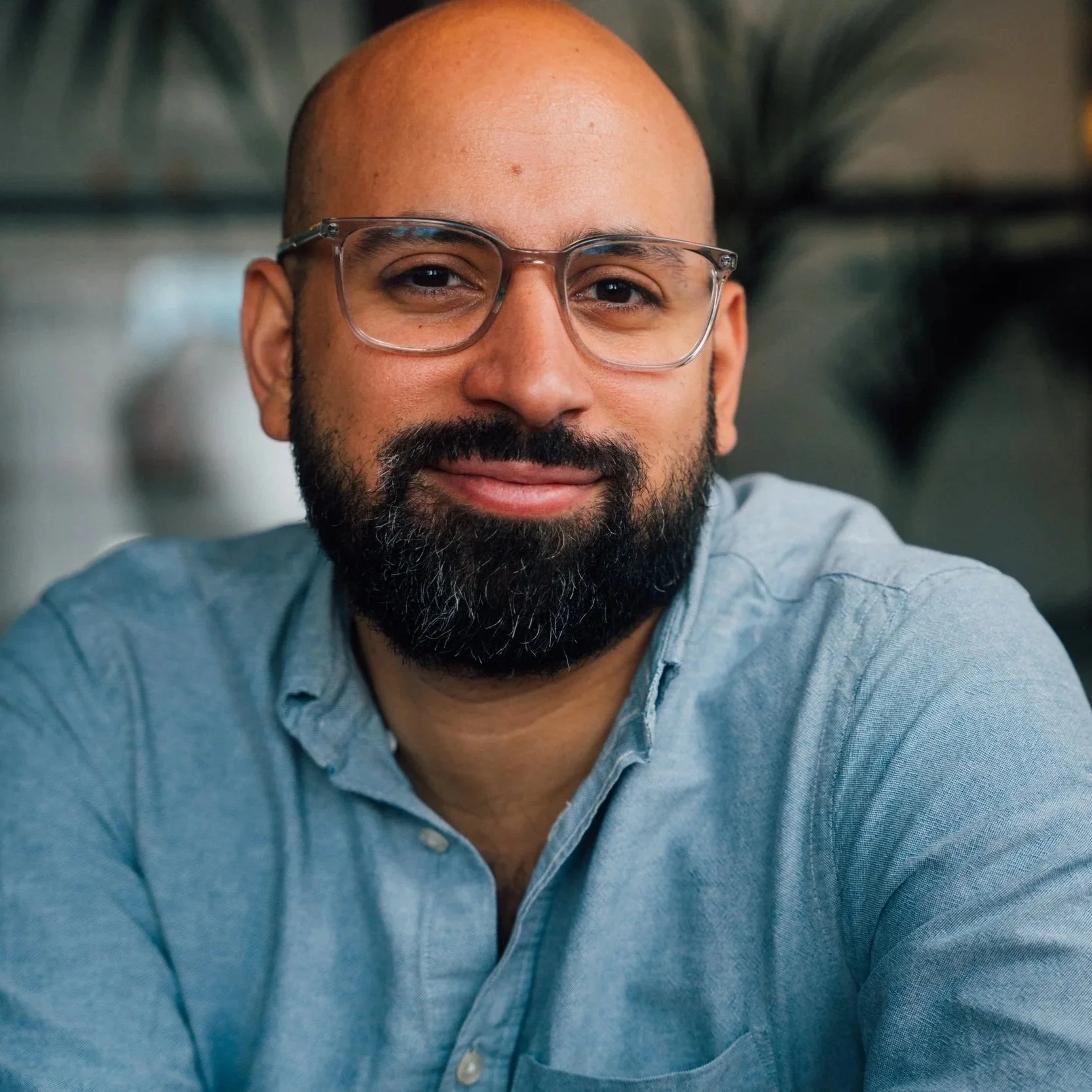
Photo credit: Benjamin Jenak
Gionathan Lo Mascolo is the founding Deputy Director of Faith in Democracy, an international organization strengthening faith-based responses to religious nationalism and the global religious right. For the past fifteen years, he has worked across Europe and internationally at the intersection of religion, politics, and extremism. He has advised faith-based and secular civil society organizations and multilateral institutions, and has led advocacy and public campaigns. He is the editor of the volume The Christian Right in Europe.
In this conversation, Lara Habboub, Communications Lead for the Democracy & Belonging Forum, speaks with Gionathan about the complex ways religion shapes democratic life today. They explore how faith can be mobilized to divide and exclude, but also how it can foster belonging, build solidarity across borders, and strengthen democratic institutions.
Could you briefly share your background and what led you to work at the intersection of religion and democracy?
I began my career as a journalist, reporting from North Africa during the Arab Spring and later from Syria as the uprising against the Assad regime turned into civil war. At the beginning, I met many young people my own age who were taking to the streets to demand reforms, democracy, and freedom, often looking toward Europe as a model for a better future.
But after the regime responded with extreme violence against its own population, that dynamic shifted quickly. As repression intensified and meaningful external support failed to materialize, many young people took up arms to defend their families, and more radical actors entered the space. Islamist groups and foreign fighters began reframing the conflict in absolutist and religious terms, offering an exclusionary sense of meaning, belonging, and vengeance. Some of the same students I had met later joined armed Islamist groups such as al-Nusra, part of a broader spiral of radicalization that would help create the conditions in which ISIS could expand. Moderate religious voices were largely unable to stop this spiral.
What stayed with me was how quickly political and moral frameworks could be reshaped. I saw how religion, which had initially been largely absent from the protests or expressed through a language of justice and dignity, could be mobilized to legitimize exclusion, cruelty, and radicalization.
When I later returned to Europe, I began to notice patterns that felt disturbingly familiar. As right-wing populism gained ground, I encountered similar far-right narratives in Christian contexts across countries and traditions: around refugees, identity, gender, national decline, and the need for “strong leaders.”
What made this especially striking was that I was also seeing these shifts in the religious environment I had grown up in: a racialized migrant and religious minority community in Germany that had itself experienced exclusion and, historically, persecution under fascism. And yet, more and more people from this community were beginning to speak admiringly about figures like Trump or Meloni, or even nostalgically invoking Mussolini.
What I had witnessed in Syria—the politicization of religion and the sacralization of politics—was also emerging, in different forms, within democratic societies in Europe and beyond. That recognition pushed me to move from observing these dynamics as a journalist to working on them more systematically as a political and civic problem. It led me to continue researching and engaging this phenomenon, including editing a volume on the Christian Right in Europe.
It also continues to shape my work at Faith in Democracy. The central question that has stayed with me ever since is not only how religion can be used to undermine democracy, but how faith actors can be better equipped, connected, and mobilized to defend and advance it.
Most people tend to think of religion and democratic politics as separate spheres, or even in tension with each other. How does your organization challenge that assumption, and what does it look like in practice to bring religious actors into pro-democratic work?
There has always been a tension between religion and politics. But that tension is not necessarily a problem; historically, it has often been productive. The negotiation over authority, dignity, and the common good has shaped democratic development and contributed to the emergence of human rights.
The problem today is not that religion is present in public life, but how it is being politically organized—and toward what ends. In much of the Western world, church–state separation has often been misread as requiring religion to be pushed out of the public sphere altogether. In doing so, democratic actors have ceded precisely those terrains where religion remains powerful: moral language, collective imagination, hope, and belonging. That space has been filled by illiberal actors who have been far more strategic in organizing religion politically. Ultraconservative religious actors have aligned themselves with nationalist and far-right politics. Religion is repeatedly used to legitimize power, soften exclusionary agendas, and give anti-democratic projects a moral vocabulary.
At Faith in Democracy, we start from the premise that religion is not external to democratic life, but part of it—and that democratic actors need to engage it more consciously and strategically.
In practice, this means helping faith actors respond to the realities they are already facing: countering religiously framed disinformation, preventing radicalization, and adapting their messaging to polarized environments. We support leadership development, strategic communication, and public engagement, while also helping actors develop theological and political arguments that are both credible and accessible.
We also focus on relationships and infrastructure. That includes strengthening ties between faith-based and secular actors, building on existing ecumenical and interreligious networks, and helping actors move from isolated efforts to coordinated action. The aim is to enable visible, structured democratic faith coalitions that can intervene publicly, support one another, and act with greater consistency and impact.
In short, our work is about helping pro-democracy faith actors become more strategic, more connected, and more resilient. The religious right has spent decades building networks, narratives, and organizing capacity. Democratic actors cannot afford to remain fragmented or reactive anymore.
Religious identity can act as a bridge between people from different backgrounds, extending beyond national borders. How does your organization draw on this transnational dimension to build solidarity across difference — and what does that mean for how religious actors engage with the nation-state and democratic institutions?
Religious communities have always operated across borders, and many of them long predate the modern nation-state. That is part of what makes them so politically powerful and contested. We have seen very clearly how effectively transnational religious networks can be used to weaken democracy. But the democratic response to this is still far too national.
What is often overlooked is that this is not only a transnational issue, but also a transreligious one. Whether it is Hindu nationalism in India, Buddhist nationalism in Sri Lanka and Myanmar, the Turkish-Islamic synthesis in Turkey, Christian nationalism in the US, Europe, Latin America, and parts of Africa, or religious Zionism in Israel and the US, we are seeing different versions of a broader pattern. These movements are not identical, but they often work from strikingly similar playbooks: shaping identity, morality, and belonging long before they fully capture politics.
That also means there is already a great deal of experience, resistance, and strategic learning across the world, but it remains far too disconnected. At Faith in Democracy, we try to help close that gap by connecting faith actors across countries, traditions, and sectors. When that happens, people often realize very quickly that they are not isolated cases, but part of a broader pattern. That creates solidarity, reduces isolation, and opens up practical exchange around strategy, communication, coalition-building, and public intervention.
This often goes beyond intra-religious exchange. Faith actors from different traditions can learn from one another in highly practical ways; for example, what activists resisting Hindu nationalism in India can share with Christian organizers in Uganda confronting religiously framed anti-LGBTQIA* persecution, and vice versa.
This does not bypass the nation-state or democratic institutions. It strengthens religious actors within their own contexts, making them less isolated, more confident, and better equipped to defend pluralism and democracy.
What unique role can faith leaders play in bridging divides that leaders from other sectors may not be able to play in the same way?
Faith leaders operate within a different kind of legitimacy than most political or civil society actors. Their authority is relational and built over time, which gives them access to people and spaces that are often difficult to reach through formal political channels.
What makes this especially relevant is that they are present at key moments of vulnerability and transition—crisis, loss, conflict, and everyday community life. They often have the ability to engage people not only politically, but morally and emotionally, translating abstract democratic principles into language that resonates with lived experience. That can make them effective in de-escalating conflicts that are less about policy and more about identity, recognition, and fear.
At the same time, this role should not be romanticized; it is deeply ambivalent. Religious authority has often been abused—through sexual and spiritual violence, but also through the active support of authoritarian regimes and exclusionary movements. Religion can deepen divisions just as much as it can bridge them.
What makes faith actors valuable in democratic work is therefore quite specific: they bring long-standing community infrastructures, traditions of storytelling and organizing, and access to constituencies that are often beyond the reach of conventional political actors. In a time marked by loneliness, algorithmic manipulation, and the erosion of shared social spaces, working with faith actors needs to become a strategic cornerstone of any pro-democratic approach.
Our experience is that many pro-democracy faith leaders are willing to play this bridging role, but lack the tools, networks, and support to do so under pressure. When those conditions are in place, they can act as credible intermediaries—able to connect across divides, widen the reach of civil society, and create spaces where people who would otherwise not meet can engage with one another.
Can you share an example of a successful initiative where a religious actor played a key role in defending or strengthening democracy? What made it work?
One recent example I find especially instructive is Brazil. For years, Bolsonaro and his allies were highly effective at presenting religion, especially evangelical Christianity, as naturally aligned with authoritarian, anti-rights, and exclusionary politics. That created the impression that religious communities had already been politically captured by the far right.
But that was never the whole picture. In the run-up to the 2022 election, a range of faith actors—particularly progressive Catholics, evangelicals, and faith-based civil society actors—worked to challenge that monopoly. They did not do so by trying to simply “out-religion” the far right, but by rebuilding trust, engaging communities seriously, and reconnecting democratic politics to moral concerns people actually cared about: dignity, poverty, justice, care, and the common good.
What made this especially instructive is that it required strategic compromises from both sides. Secular democratic actors had to take religion more seriously and engage communities they had often ignored or written off. Faith actors, in turn, had to enter difficult coalitions, speak beyond their own constituencies, and navigate real political ambiguity. Based on many interviews we led, it’s clear that this process was neither neat nor comfortable for secular and faith actors alike, but necessary for both their newly recognized shared interest.
What made it effective was the combination of credibility, rooted community presence, and strategic coordination. It helped expose the far right’s claim to moral authenticity as deeply selective and hypocritical, reopening democratic space in the process by showing that faith did not belong exclusively to authoritarian politics.
Briefly later, we also saw similar dynamics in countries like Poland as well. The broader lesson is that democratic breakthroughs become more possible when faith actors are not left isolated, when secular and religious actors learn how to work together strategically, and when people are willing to build coalitions across real differences.
What strategies are available to pro-democracy religious actors working in increasingly illiberal or authoritarian environments?
In increasingly illiberal environments, survival and effectiveness depend less on visibility and more on structure. One of the most important starting points is to resist isolation. Isolation is rarely accidental, but rather produced deliberately, as authoritarian and far-right actors aim to fragment communities, intimidate visible voices, and try to make people feel alone or politically marginal.
The first piece of advice is simple: don’t stay isolated—organize your relationships. Build small, trusted networks across faith communities, but also with secular actors, journalists, and civil society. Regular exchange, mutual support, and knowing who to call in a crisis are often more important than large, visible structures.
The second piece of advice is: focus on concrete issues and build coalitions from there. Not everything has to fit neatly into strategic interfaith or faith–secular partnerships. Work where you genuinely agree, and be transparent about where you don’t. Allies do not need full alignment. Starting from shared concerns such as care, dignity, safety, and protecting vulnerable communities allows collaboration to emerge without forcing artificial consensus. Being upfront about differences prevents fragile alliances that collapse under pressure.
The third piece of advice is: build practical capacity to operate under pressure. Many faith actors are not prepared for disinformation campaigns, public attacks, or political instrumentalization. They need tools for communication, social media, and public engagement, but also for security, narrative development, and emotional resilience. This includes knowing when to speak publicly, when to act more quietly, and how to stay engaged over time without burning out. Look to resource this potential power from within and share knowledge. In constrained environments, effectiveness comes from consistency, coordination, and trust; the ability to act together and sustain presence even as pressure increases.
What aspect of your work is most often misunderstood?
One of the biggest misunderstandings is the idea that religion is politically irrelevant.
We are still telling ourselves a story of secularisation that no longer matches reality. This is particularly true in Europe, and especially among educated urban milieus. Too often, there is an assumption that religion will simply disappear if we stop paying attention to it—or because it no longer plays a central role in our own lives.
But what we are actually seeing is much more complex: a diversification of faith, new forms of spirituality, and at the same time a growing political instrumentalization of religion, particularly by far-right and authoritarian actors.
This is visible in countries such as Hungary and Poland, where religion has been used to legitimize democratic backsliding, exclusionary politics, and the erosion of pluralism. But it is also visible far beyond Europe. In the war against Ukraine, for example, religious-nationalist framings have been central to Russia’s justification of aggression, particularly through the role of the Russian Orthodox Church. Religion is not always the engine of these developments, but it is often one of their most effective legitimizing languages.
That blind spot becomes even harder to defend when more than 80 percent of the world’s population identifies as religious or spiritual, and religion is growing rather than disappearing in many parts of the world. Treating it as politically secondary is not just analytically wrong—it is a strategic mistake.
If democratic actors continue to ignore religion, dismiss it, or assume it will fade away on its own, they will keep ceding ground to those who are already organizing it far more seriously.
Looking ahead, what gives you hope about the role religious communities can play in strengthening democracy?
What gives me hope is that this work is already happening, often far away from the spotlight and under real pressure. Across the world, including in small countries and highly constrained environments, there are faith-rooted actors who are standing up to authoritarianism, religious nationalism, and exclusionary politics, often at personal, professional, or institutional risk.
Many of them are protecting vulnerable people, creating spaces of belonging, resisting fear-based narratives, and refusing to let religion be defined only by resentment, domination, or reaction. And many are doing so not alone, but in alliance with secular actors, local communities, and other religious groups.
What is especially hopeful is what happens when these actors find each other. People who may have felt isolated suddenly realize they are part of a broader struggle, that others are facing similar pressures, and that strategies, courage, and even joy can be shared. You can often see something shift very quickly: confidence grows, new alliances emerge, and what once felt marginal begins to feel more possible.
There are no guarantees in this work. But there are real openings, real forms of solidarity, and real small victories. I think we need to take those seriously, protect them, and build from them. For me, hope is not the belief that things will automatically get better. It is the decision to keep organizing, keep working, and keep widening the space for people to act together with courage, dignity, and imagination.