A Country In Search of Repair: What’s really broken about American democracy?
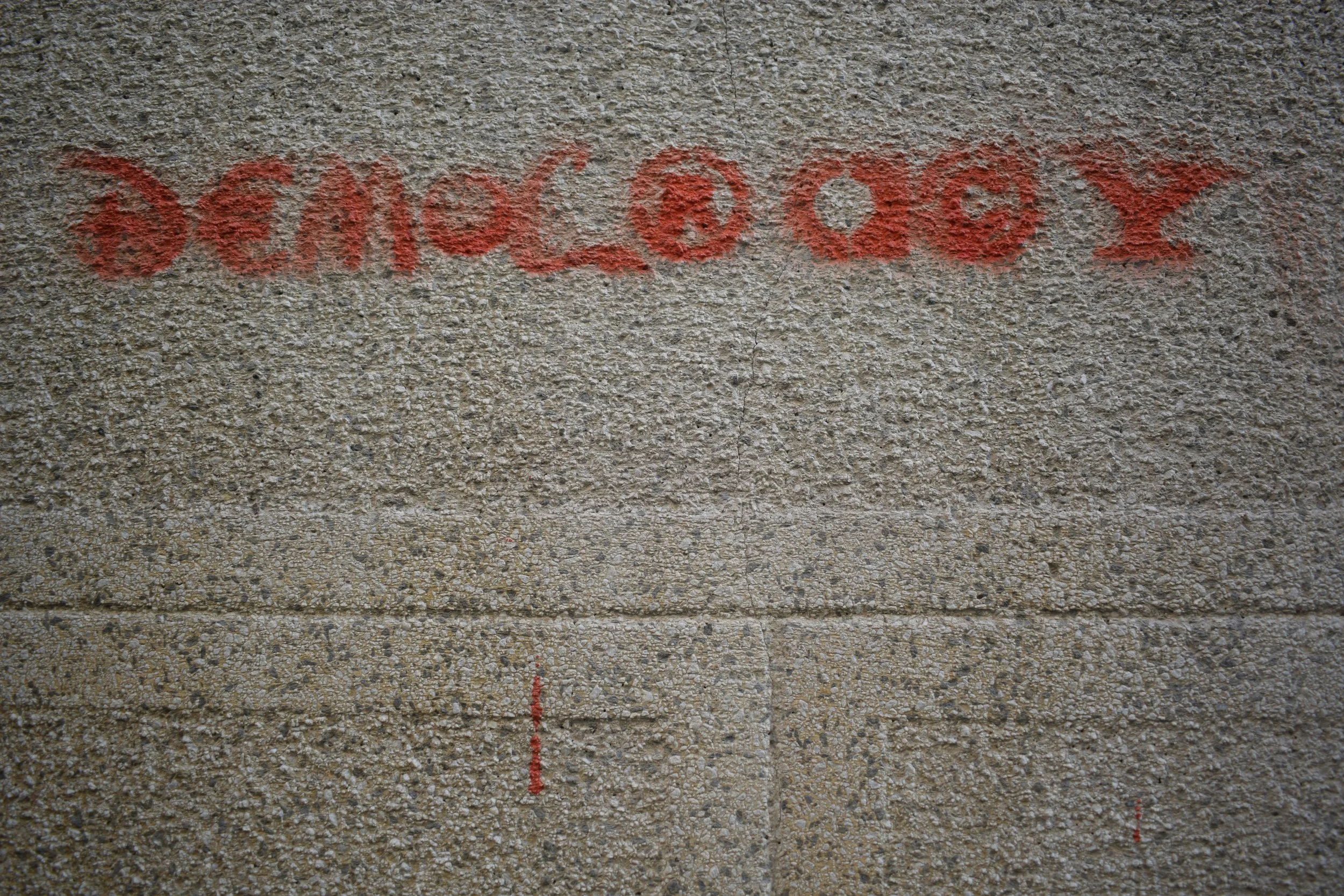
Photo by Marija Zaric on Unsplash
What does it feel like to live inside a democracy that’s not serving us?
Caustic. Rage AF.
Like I’m about to implode.
Too much energy having nowhere to go.
These were some of the responses shared in the Reparative Democracy Design Lab at our kickoff session last month. Within these visceral reactions, something deeper emerges.
Pain, from a broken social contract. The mirage of freedom, absent the real mechanisms to enjoy it.
One thing that rang clear is that the failings of American democracy aren’t a recent phenomenon. Since our founding, the promise of self-determination has been aspirational – and deeply at odds with the actual mechanisms of the American political system. Those mechanisms were always designed to perpetuate the power of a few over the many.
These formative structural concerns were all named as early as the Federalist Papers, where the founders debated the core components of the proposed Constitution. In other words, this system wasn’t constructed despite the harms it created. The harms to some served a purpose for others. The version of American democracy we’ve experienced was designed to protect a power structure, one intent on dividing us. So this version of democracy isn’t what’s broken – it’s been working exactly as designed.
What is broken is something more personal: our relationship to power.
For communities of color, poor folks, and those of us clear that the nation was never designed in our interest, that broken relationship has yielded civic trauma. This sense of hopelessness accumulates from repeatedly facing up against a system that actively harms and excludes you from full participation. And while we may still participate in systems out of survival, we don’t expect true freedom in them.
Perhaps this is why Americans are showing lower belief in the version of democracy we’ve experienced and lower commitment to the preservation of it. The rule of law, separation of powers, rights to free speech, press, religion, due process and the fundamental right to vote, all of these serve an important purpose. Yet these building blocks have been insufficient in delivering what we’re really looking for – a government that serves us all, making it possible to pursue freedom on our own terms.
At this critical juncture in our nation’s history, our mandate for the future is clear.
We’re not trying to preserve the version of democracy that has failed us.
We need a new form to emerge, rooted in Dr. King’s vision of a beloved community. This future democracy is built towards the ambition to repair our relationship to ourselves, each other, and this earth.
Of all the conversations in our first session, what came through most clearly is that this version of democracy dehumanizes us – especially those with identities that have been criminalized, marked as ‘property’, or otherwise excluded from full rights at the nation’s founding. Yet the dehumanizing impacts of this version of democracy extend even to powerholders. Part of being human is seeing the wider connection between yourself and all other people. Adhering to a legal system that gives you rights over a fellow person degrades your ability to see the inherent connection across our shared humanity.
Mild reform won’t suffice to address a government that has left any of us feeling this way. Repair looks like redesigning the relationship between a government and its people – and in doing so, redesigning the relationship between us, forging a new relationship among ‘we the people.’
We’ll spend upcoming sessions exploring what a healthy relationship to power, in service of humanity, can look like. Next session, we’ll start to define what feels ‘humanizing’ in our world, and what we can bring from these experiences into the relationship of power with the state.
Join us in this work by exploring these questions with your own community:
What is the kind of human we want to be? What is the democratic system that is necessary to incentivize that kind of humanity?
Given the naming that our dying democracy is ‘dehumanizing’ — what would a democracy that makes us human feel like? What would it feel like to engage in democratic muscle-building that is ‘humanizing’?
How would you describe your relationship to government? How would those in your community describe the relationship they hold to government – and the relationship they wish they had to government?
This piece was authored by Niketa Brar, with collaboration from Phillipe Cunningham.
Niketa Brar serves as a Network Catalyzer with the Forum, where she leads the Reparative Democracy Design Lab.
She is a Chicago-based practitioner who has spent her career studying the failures of democracy and working to redesign the systems that produce them. She works with teams of community organizations and government leaders across the United States to translate collaborative governance principles into practice and co-create policy solutions.
Phillipe Cunningham serves as Senior Director of Civic Leadership at Urban Rural Action and a member of the Reparative Democracy Design Lab. The opinions expressed in this piece are their own and not representative of Urban Rural Action's beliefs.
The Reparative Democracy Design Lab is one of several communities supported through the Forum's Network Catalyzers Program, a year-long initiative that supports members to launch their own communities around othering, belonging, bridging, and democracy. Catalyzers receive mentorship, peer support, and an honorarium to sustain their work. Explore the Network Catalyzers Program for more conversations and insights from community leaders supported by this initiative.
If you are interested in joining the Reparative Democracy Design Lab, you can express your interest here.
Editor's note: The ideas expressed in this blog are not necessarily those of the Othering & Belonging Institute or UC Berkeley, but belong to the authors.